|
Recently for the Bakersfield BirthNetwork, I was presenting on comfort measures for birth. Expectant families, as well as doulas, come to these gatherings, and I love being able to offer information that is not only helpful to parents, but also information other professionals can take to their clients! As a Lamaze-certified Childbirth Educator, I am always putting together ideas in an unusual way to help make learning about birth fun! The inspiration for this started when I had a few ideas I wanted to squish together into an activity: 1. Update the stages of labor to reflect an additional pre-labor phase at the onset of the first stage 2. Scaffold the stages/phases of labor by choosing and practicing supports meant to intertwine with the key emotional and physical events occurring 3. Provide a handout which not only helps visualize the opening of first stage, but also serves as a cheat sheet to labor happenings, timing, and ways to cope What I came up with, I call the "Spinning Circles of Womb." Just kidding, I don't. But I think it works, and it's pretty simple, and that's all that counts -- no frilly title needed. Basically, here are the supplies:
I can't remember a time when I sat participants at a table, but for this activity we did, indeed, sit at a table. Surrounded by Mr. Sketch Markers, paper circles, and stickers, I began to share the stages of labor by tacking three sheets of (laminated) paper onto the wall. There is relief when an expectant parent realizes there are only three stages of labor (I did have a dad once who suggested there were 14, but that was his lucky number, and I asked him to take a guess!). Three. That's not hard to remember, right? Then I tack up two more papers, which you can see below, right. I share how some genius decided to break the first stage of labor up into phases, which is another word for, let's just insert more stages into this stage and call it good. On the front of the circles we write things like average length of that phase, approximate cervical dilation achieved, contraction action, and more (note: I don't show all of that in the picture). The pinnacle of this is affixing the face sticker to the appropriate phase, as a handy visual reminder of what a laboring person might be feeling in that moment. While we are moving through the phases with markers and stickers, we are also brainstorming what comfort measures might be beneficial at what time, and those are added to the back of that circle. We practice these comfort measures as we go. If we expect people to feel comfortable with different physical ways to counter the strong sensations of labor, we can't expect them to get there from a picture alone! Would you step into a ballroom, ready to dance in front of judges, simply from pictures you saw in a book? We need to actually show families what these positions and movements look like, how they feel, and when they help -- or they are of no help at all. At the close of this activity, families walk away with their concentric circles of information, a piece of pool noodle, and an information sheet which shows about 20 different physical positions of a laboring person and partner working together.
Not a bad way to merge my three goals! A handy takeaway that can be utilized easily during birth. 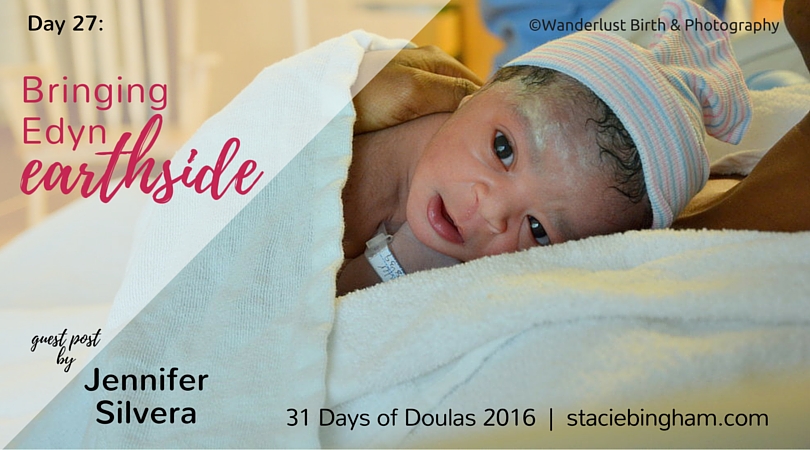 I fell in love with this birth story! I have a penchant for birth stories written by doulas, and this one does not disappoint! As a woman in labor, I can also relate to how incredible and soothing water can be -- one midwife I used to work with called sitting in a big tub of water an "aquadural," and I know many find this to be true. I hope you enjoy this uplifting tale of birth! I find childbirth to be an absolutely beautiful event. It is certainly not at all glamorous by any means, but it is such an amazing experience to view not only as a bystander, but also as a participant. I have had 4 children, all girls, with 4 completely different experiences. All 4 birth experiences, in addition to my losses, have shaped me into the woman I am today. My youngest daughter is now almost 4 months old, and she was conceived the same month I had a miscarriage. The pregnancy went very well, but I was very afraid that my labor and delivery would mirror the delivery of my third daughter, Spirit, which was extremely traumatic. This led to a lot of anxiety and fear, despite my knowledge on the subject. It was for this reason that I hired a birth doula. My due date was Saturday 11/21 and absolutely NOTHING was happening, only slight Braxton-Hicks here and there. My older kids were at my parents’ spending the weekend, so I figured it was the perfect time to put together my bed frame and make sure the room was arranged for baby’s arrival. So I took everything out of our room, and with a little help, put the bed frame together. My boyfriend Jermaine wasn’t too happy about it, but it needed to be done so I had access to our bedroom closet and I could start setting shit up. That probably should have been my sign that something was up since I was so determined to get it done RIGHT THEN, lol. Mind you, I had already partly cleaned my kitchen (still had dishes to do, but had cleaned the floor by hand and had already done enough dishes to fill the dishwasher and dish drain by the sink), and had cleaned my bathroom the day before. Once I was done, I wanted to start putting everything back in our room, but Jermaine was hungry so we ordered food and I went to go get it. By that time it was about 8-8:30p, and still nothing was happening. I was exhausted and my back was starting to hurt a little, which I chalked up to it being from bending over to clean and work on the bed frame. We started getting ready for bed and I left the place a complete mess thinking “Oh, I’ll just get up early and move everything back, etc etc”. So around 12:45-1a, the back pain was still just annoying and then suddenly got really intense. I posted on Facebook in a pregnancy group I was in asking if anybody had experienced back labor and what it felt like, and called my OB as I had began feeling some pressure as well. He told me to wait it out a little since I wasn’t having any contractions at all, but said he would call the hospital just in case I decided to go in so they knew to keep me. Right after I got off the phone with him, I used the bathroom and then went to bed. I woke up at about 3:45, 4a because I had to pee again (had been drinking tons of water to see if it would help the pain, which it had) and began feeling the intense back pain and pressure again. Still no contractions at that point, but I just couldn’t move much anymore so we decided to head to the hospital. Because of the pain, it took me awhile to get dressed and then at about 4:30a, BAM! First contraction hit! And the back pain and pressure literally stopped and I was cool. Started timing the contractions and they were 3-5 min apart straight off the bat and lasting from 30-45 seconds each. So, through all the mess I had made, we grabbed my bag, got as dressed as I could, and we were out the door. In the hurry, I tried calling my doula, Sam, and couldn’t get in touch with her since my phone was acting screwy so to keep my anxiety down I just texted her what was going on and updates as they happened. When we got to the hospital, we were immediately taken to triage after they verified my documentation and weighed me. In triage, they hooked me up to the monitors and checked me. I was a stretchy 4-5 cm dilated, had bulging membranes, and was almost completely effaced, this was at about 5:15a. They moved me into my room, which had a relaxation tub, and immediately started filling it up for me. That tub was AWESOME!!!!!! Definitely consider laboring in a tub of warm water if you can, it feels ABSOLUTELY AMAZING!
So, my doula comes and having her there was so relaxing and completely made the difference between a good, stress-free experience and a stressful, anxiety filled experience. I labored in the tub for about 2 hours and only got out to use the bathroom. At about 7:50, the contractions that hadn’t been bothering me suddenly felt different and I was feeling much more pressure so I asked to be checked. I told them that if I was a 7 or less, I wanted the epidural but if I was more than 7, I would tough it out. As soon as I stood up, I got hit with the most intense contractions back to back that I had EVER felt. After about 5-10 min of contractions where I couldn’t move, I finally made it over to the bed. I couldn’t sit, it was unbearable so I was on all fours moaning through the contractions.
The nurse checked me and I was at a 7, so they hooked me up to fluids and called the anesthesiologist for my epidural. My Dr. and a midwife came in and right then I got the unbearable urge to push and couldn’t stop, so they helped me roll over, my water broke, and in 2 pushes (about 2-3 minutes), my little rainbow was Earthside and super alert! 6lbs, 19.25in long, no stitches or repairs needed, and the anesthesiologist walked in not even a minute after she was born to give the meds, lol. Oh, and did I mention that this was my second VBAC! 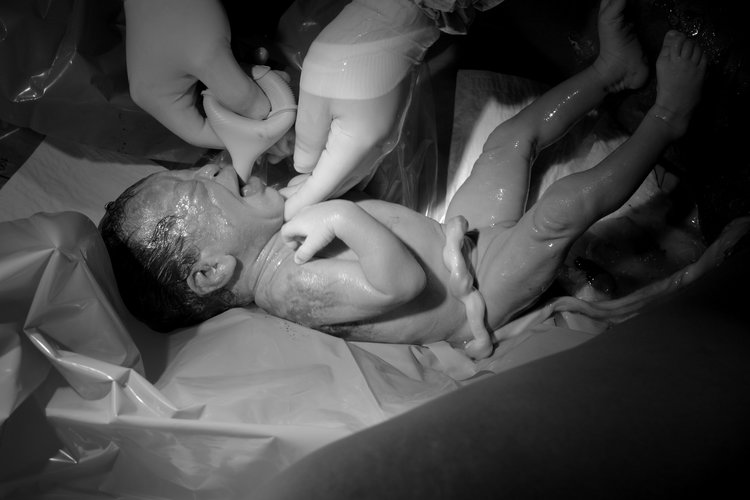 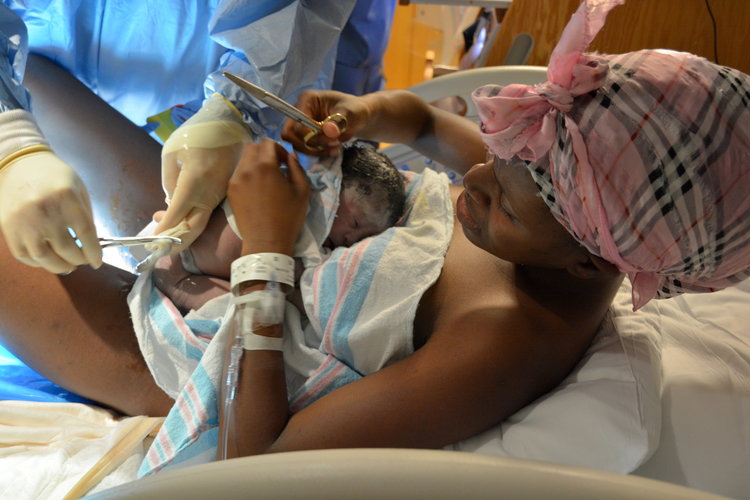 Jennifer Silvera is a pediatric LPN, RN BSN student, and mother to 4 beautiful little divas. She loves all things to do with birth and has a passion for birth and helping others. Ever since she can remember, she has loved pregnancy, children, and learning. In 2005 Jennifer was motivated to learn all she could about birth when a close friend became pregnant -- and she delved even deeper during her first pregnancy in 2007. Since that time, she has had 4 completely different birth experiences ranging from your typical hospital birth to an unmedicated almost home birth. She is a Birth Arts International trained birth doula. "I believe every woman should feel supported, educated, and empowered in her decisions regarding her pregnancy and child's birth, none of it has to suck or be a horrible experience." Jennifer is currently working toward her BSN, hoping to work in L&D. Once that is accomplished, she plans to continue school and become a CNM (Certified Nurse Midwife). She truly believes an informed woman is an empowered woman. You can find her through her website, as well as on Facebook. All images copyright Wanderlust Birth & Photography 2015 -- go and visit her website, her images are amazing! Find her on Facebook as well.
I must admit, I hate math, and following close behind, is interpreting research. Have you ever noticed, many views are given when it comes to "studies" -- often "data" can be found to support opposing views of the same argument. It's enough to avoid a subject entirely, because who knows what to believe? Not feeling confident in one's ability to understand "the facts" as presented by a study can be a real weakness for a doula (and a parent!). Joyce takes this on in two parts, sharing her knowledge of the subject as she offers a primer on how to read, mark, and question a study, to really look at it critically. My journey to becoming a doula makes plenty of sense in retrospect, but it is a winding journey. I entered college as a pre-veterinary science major, ultimately switched to a Psychology major, hated counseling but fell in love with animal behavior research, and graduated with a BA in Psychology, Biology minor, and Biology Honors. I then entered a PhD program at the University of Nebraska-Lincoln in the Biological Sciences with the intention of becoming a research professor. I actually completed my coursework for a PhD, but cut my research short to graduate with a Masters when I decided a career in academia was no longer what I wanted. After graduation, I became a homemaker and mom when our son was born 5 months later. When he was 10 months old I completed my doula training with DONA International, and attended my first doula birth one month later. Now my husband and I have three children, I am a certified birth doula with DONA International, a Hypnobabies Childbirth Hypno-Doula, co-leader of ICAN of Lincoln (International Cesarean Awareness Network), and have attended more than 55 births. I have a passion for teaching others, empowering women and families to love one another better, birth, birds, and chocolate. I wanted to write a guide to other doulas and to parents-to-be on how to find, read, understand, and use primary research literature. There are excellent, free resources where the public can read the full text of research studies, although you may need to ask your physician for papers they can only access using their professional subscriptions. Reading and understanding the scientific literature is a learned skill, and I've given a crash course here. Finally, when you have found, read, and understood the research, using the information will be a highly individual decision that only the patient themselves is able to make, based on their intuition, desires, trusted counsel, and circumstances. Today in Part 1, I address how to find and read research papers, and tomorrow in Part 2, I walk you through a short research article, and discuss how to understand the paper and use the information. How do you find research literature? I won't reinvent the wheel here, Understanding Research and Evidence Based Birth are great places to start. If you find a title that you cannot access without a subscription, sometimes you can search the title on Google Scholar, or even just Google, and find the full text for free. If you only have access to the abstract, use caution. The abstract is the very last piece researchers write before submitting their article for publication, and they may accidentally include incorrect information in their haste. Scientists are human too, remember? So, if you cannot read the whole paper, use caution in using that information to make decisions. Once you've found a paper that interests you, how do you know if it's a good one? The best way is to read it and understand it. The research methods will clue you in to the robustness of the research. The gold standard of medical research is a double-blind randomized controlled trial, in which the individuals receiving the treatments, and those collecting the data, do not know what treatment was received, the treatments are randomly assigned to each individual research subject, and there are appropriate controls against which to compare the treatment effects. However, this is really difficult to do, so it is rare. When you read the methods, do you see any holes in the procedure? Anything that could have an alternate explanation? The fewer alternate explanations of the effects, the better the study. If you have found a review article, or a metastudy, this is gold. These are not primary research articles, but rather they summarize an entire field of research. Metastudies actually take the data from multiple similar studies, group them together and reanalyze the data as if it were one huge study, a powerful method. The Cochrane Database of Systematic Reviews is a great place to find these. While the review may be missing pertinent data, and only includes research conducted prior to submission for publication, these types of papers are wonderful sources of good information, when they exist. Those five years of graduate school were largely devoted to training myself to read and understand the primary literature in my field efficiently. While the average science-literate citizen need not undertake this intense training, a guide to research articles is still necessary, as reading research is not the same as reading other materials. This has been covered well and more extensively by others, so I will summarize my advice here.
Want more? www.understandingresearch.com, www.sciencebuddies.org, and www.violentmetaphors.com have wonderful guides to reading research articles. Join me again tomorrow for Part 2 where we walk through a short article together and learn what to do with the information once you understand it! This is a short, less than one page, write-up of some preliminary research. Here is the paper: Afshar, Y; Wang, E; Mei, J; Pisarska, M; and Gregory, K. 279: Higher odds of vaginal deliveries in women who have attended childbirth education class or have a birth plan. American Journal of Obstetrics & Gynecology, 2016;214(1):S162. Go read it, following my instructions as best you can, and come back tomorrow! Joyce Dykema, MSc, CD(DONA), HCHD, became a certified birth doula in May 2012. She is also a trained Hypnobabies® Hypno-Doula, and volunteers as leadership for ICAN of Lincoln, her local chapter of the International Cesarean Awareness Network. Joyce is a woman-focused doula. While passionate about natural birth and what research shows is the best for moms and for babies, the goal she strives for with every client is for women to have empowering and positive births, as the woman defines it. In addition to her doula credentials, she holds a BA in psychology and an MS in biological sciences. She breastfeeds, uses cloth diapers, uses baby sign language, babywears, and homeschools because these choices made sense for her family; she encourages others to explore and find what makes sense for their families. Joyce and her husband have three children, and live in the Lincoln, Nebraska area.
Sometimes I feel like we don't hear enough about the benefits of being active and laboring/birthing in upright positions. Babies have to navigate the pelvis in a series of necessary movements. When Mom is sitting in bed, a baby must do this all on his own; if she is moving around -- sqautting, walking, climbing stairs, rocking on a birth ball, changing her positions from being active, to resting, her baby has more help to get into optimal positions. This is a true partnership between Mom and Baby -- she helps her baby in the race to meet the outside world. And as Bernie points out, this makes things better for birth. You have just grown a tiny person, You are Wonder Woman, Stand up and be proud! OK, so you may or may not feel like adopting the Wonder Woman stance for your entire labour and birth, but here are 7 great benefits to being upright during labour: 1. Do You Know the 3 Cs? Feeling Calm, Confident and in Control!
2. Shorter labours!
3. Less chance of Distress to your Baby!
4. More Comfortable Labour!
5. More Room for Baby!
6. Decrease Chance of Assisted Delivery by 23%!
7. Decrease Chance of Episiotomy by 21%!
More Information: Whole, Healthy and Intact - Avoiding Perineal Trauma, by Tracy Donegan What is the Evidence for Pushing Positions? References: 2012 Cochrane review, Gupta et al., de Jonge and Lagro-Jansenn 2004; Green and Baston 2003; Green et al. 1990. Lawrence et al 2013 Bernie Burke is a GentleBirth Instructor and DONA trained Birth Doula, with a background in Holisitic therapies. Bernie found GentleBirth during her second pregnancy and fell in love with the program, it transformed how she felt about birth. She is passionate about all things birth and she has seen first-hand the positive change in her clients and their partners while using the program. Bernie believes that when women and their partners feel empowered to make decisions about their birth, no matter what path it takes, they step into parenthood feeling confident and secure. Bernie is looking forward to assisting families as a Doula in 2016. Supreme love and thanks to my friend Christine for allowing me to share her amazing pictures. She deserves to be a meme <3. Stacie
I have always loved music. I love when families incorporate music into their birth experiences. In fact, the other day I was at a postpartum visit where Mom and Grandma were asking all sorts of important questions about life with baby, and Dad interjected, seriously: "I have a question..." Long pause. "Should I be playing her country music around the clock now?" I laughed, and answered back with a question of my own, "Do you listen to country music? I wish I would have known that before I agreed to be your doula." They do listen to county music, and their baby's birth happened over the weekend of Stagecoach Festival, an important event in their lives as music lovers. As a Music Therapist and Birth Doula, Kate offers compelling reasons and creative ways to bring music to birth -- I know I can't wait to learn more. Music is an accessible, adaptable, and valuable tool for comfort during birth because music is a whole-brain- whole body experience. A holistic resource like music can reach the many needs of a family in labor: physical, neurological, spiritual, emotional, social -- even environmental by shaping the birthing space. There are so many reasons music for birth is just.so.awesome! And the music we choose for birth can be really impactful and powerful. As leaders in health care, music therapists have demonstrated how accessible and enriching music can be for improving quality of life, rehabilitation and healing. As a doula and music therapist, I’m entrusted to bring the music to the birth environment and I use it as therapy -- a prompt for change, discovery and self-expression. To be clear, music therapy for birth comes in many forms. I use my voice, my body, and at times various instruments through live musical interactions whenever appropriate. Yet, most often during the labor and delivery stage, music enters the space as pre-recorded playlists. Music is more portable and higher quality than ever before. So every time my phone beeps or buzzes in the middle of the night, I make sure my speaker is charged, my client’s custom birth playlists are downloaded, and that I am ready to help deliver one of my favorite birth bag resources: the music. So for the birth workers and parents out there who are considering using music as birth support, I’ll share my top three reasons why the music you choose in childbirth matters. 1. Music can support comfort and relaxation during birth to reduce pain perception, optimize hormone release and steady breathing. I was privileged to attend a birth where the mother, so calm and so peaceful, took deep, slow, controlled breaths and did not need to push her baby into this world. Instead, the power of her breathing and the rhythm of her pulsing contractions, very simply, very gently, guided her baby out. Her vocal and guttural instincts were validated through the singer and supported by her beautiful lyrical mantra. The rhythm of the music helped the mother’s body entrain and progress, to open and release her baby gently into this world. Music has been shown to support, entrain and influence many dimensions of childbirth. So if there is music out there that will support this, do you think there is music out there that might work against the birth process, making birth more painful, longer and unsteady? Most likely there is, but this will be different for every person. This is why it’s important that doulas and birthing families recognize how every song you plan to use makes the birthing team feel, move, breathe and think -- tall order and a big responsibly. It is important to know favorites and to know what music typically is not preferred. It’s also important to know the difference between just streaming any “birth” playlist, and using carefully chosen songs to purposefully impact birth. 2. Music supports ANY type of birth. Regardless of what type or style is preferred, music can be incorporated into any birth plan and pairs nicely will ALL childbirth techniques. I collaborate with couples to create the most customized and comfortable playlists for birth no matter what type of birth they have planned. Many of my tips for using music work no matter how families plan to birth; active breathing, passive hypnosis, partner supported, even planned surgical deliveries. Everyone’s birth rhythm is different. This is why the music should reflect the goals for birth and the stage of birth. Feel like movement will make a difference? You’ll need a steady rhythm or a beat. Need to sleep? Try a single instrument or vocal tone to help lull the brain to deep relaxation. Epic contractions? Why not try that romantic soundtrack for support of vocal moaning? As a music therapist, I provide guidance in making the best song choices from preferred and familiar music to shape birth playlists to suit birth plans and personalities while maximizing the therapeutic potential of the music to support birth at home, in hospitals or during cesarean sections. In fact, music in the operating room and a doula by your side can make cesarean births calmer, more memorable and family centered. 3. Music will create unforgettable bonds with baby before and at the time of birth. As a whole brain stimulus, music is a window into great realms of creativity, self-awareness and healing. I’ve witnessed families experience the importance of prenatal sound together in music, making art, moving through the stages of grief and life and love; all initiated by a song. At the moment of birth the music can become part of the baby’s and parents' permanent memory landscape, a neurological imprint if you will. A carefully chosen playlist of songs can help families revisit the memories at any time, rejoicing in the happiness or healing from difficulties that were faced in labor. Along with supporting the biological imperative of bonding after birth, music can also etch the vibrations of your family birth song in your minds and on your heart, forever. Parents are always reporting back to Creative Childbirth Concepts® that they continue to use their custom playlists as they transition into the reality of raising a baby. Together they continue to explore and use their favorite music as a resource for parenting. Parents report music was an integral part to their therapeutic prenatal preparation. Their music playlists were magical in how they connected them as a team, shaped their environment and created lifelong memories as a soundtrack to their birth. The music helped heal their past birth experiences. The music helped them anticipate their fears and anxiety and work through them by supporting imagery and reflection. The music was “theirs” and the music was therapeutic. It CHANGED their births. This is why I believe the music we choose for childbirth matters. I believe in the power of music at the moment of birth. I believe in the power of music for supporting the prenatal experience. I believe in the power of music bonding, to process fears, to address anxieties. And I believe in you: I trust that those of you who use music, make music, and incorporate music into birth already are capable of making awesome choices and using intuition when working in the moment. I trust that those of you who are invested in learning more will seek knowledge and integrate it into the best music choices possible. But I also believe it’s important for you to know that there is a growing number of perinatal music therapists out there who are here to guide you whenever advice is needed. We really do want to help make birth better through music. Connect with me and I’ll share my favorite birthing music with you! It’s your birth. Be Creative.™ Kate Taylor, MA, MTBC is a birth doula, board certified music therapist and owner of Creative Childbirth Concepts® in Chicago IL. Kate provides perinatal music therapy services and assists families through labor and delivery as a birth doula. Kate provides creative supervision for music therapists and mentors birth professionals around the globe. She is passionate about educating others about music for childbirth and helps empower families through music, movement and other creative arts during infertility, pregnancy, birth, even during new parenting adventures. Visit www.birthmusic.net for more information or connect on facebook with: Creative Childbirth Concepts® Music Therapy & Doula Services. In depth YouTube interviews, blog radio interviews, and audio podcasts of Kate are also available for you to learn more about her music therapy assisted childbirth practices, doula work and personal journey as a birth worker.
Marivette is another Bakersfield area local, and this is also her third time participating in the 31 Days project. She holds the record for most repins in her first post, Using the Rebozo in Labor. I had the honor of joining her at a very long homebirth recently, and with the casual nature of this labor, family, and birth team, in the long stretches between serious midwife-needed events, I saw Marivette's doula side shine though. Ever appreciative for all the support a woman gets in labor (and let's be honest, it made my job easier), I saw Marivette's knowledge and understanding come though her voice, her eyes, her touch. I know she will be an incredible midwife, and the families she will serve will be in great hands. I have been a doula for 18 years. I began after the birth of my third child who was born at home with a direct-entry midwife. My midwife asked me if I would help her at births, and that launched me into being a home birth doula for seven years. She eventually moved away, and at that time, it was too far for me to travel to be a doula for her clients. I decided to start attending births at hospitals, and I have been an in-hospital doula for 11 years now. When I was a doula at home births, I never saw myself in the position of midwife. I think at that time in my life, I wasn’t ready for that kind of responsibility. My children were all very young, and I wasn’t yet done having children. I was a lot younger, and I felt I wasn’t quite qualified and didn’t have enough experience to be in that role. So, I’d occasionally tell the midwife with whom I worked, that I didn’t want to be a midwife. I also thought that midwifery was not for me. After all, I had been pregnant while a senior in high school, barely graduated (attended a California’s continuation program to finish high school) and I had five children by the time I was 29 years old. By the time I was 38, I had eight children. Life was busy enough with homeschooling, church, helping my husband with his business, and being a doula. I couldn’t possibly add anything else to my over-flowing plate. Well…that all changed in 2014. I noticed a trend in homebirths not only in the nation, but in my own community. I noticed no midwifery care was being provided to Spanish speaking women in my community. While English speaking women at least had the option of receiving midwifery care from a midwife who spoke their language if they so desired, Spanish speaking women in my county do not even have that option. “Someone should do something about this!” I thought. I still didn’t think that person would or could be me. I became friends with a doula in a nearby city. She also has a large family, AND she was studying to be a midwife. I was excited for her! A doula-turned-midwife was a great journey. As the months and years of our friendship developed and grew, she eventually finished midwifery college, passed the NARM exam, and became a licensed midwife. During this time, I began being moved to pursue midwifery. I think it was always in me to become a midwife, but I just couldn’t imagine how I would pursue a midwifery degree. Watching my friend inspired me, so I began asking her questions about midwifery school. My friend patiently answered all my questions, provided me with links, and fully encouraged me to go this route. I talked to my husband, I prayed about it, and I -- finally -- knew this was the next step for my life. After looking at different schools, I chose Midwives College of Utah (MCU). MCU offers continuing education classes and these classes are a non-committal fashion to figure out if a distance education platform works for a person. After one semester of continuing ed classes, and getting a feel for how MCU operates, I knew, for sure, this was the school for me. I began the process of enrolling, and I was accepted into the Associates of Science in Midwifery at Midwives College of Utah in August, 2015. It will take me three years to complete the academic portion of the associate’s degree, and possibly another year to complete the clinical portion, totaling four years before taking the NARM exam. Changing careers at the age of 45 has been an exciting and stressful adventure. My whole life, and how I operate, changed drastically. I went from having plenty of time to do all the things household, to doing school work 6-8 hours per day, including the weekends. I had to adjust my way of thinking, accept that going to school is the same as having a full-time job. When deciding to take vacations or weekend trips, or even day trips, I look at my calendar. I may have to do extra school work to make up for days I won’t be able to get any work done. I may have to take some school work with me, and get some studying done while on vacation. I have had to adjust everything around my education, and it has been difficult to make that transition. Everything, right now in my life, is all planned around my schooling. In case any of you might by thinking, “Well there are summer breaks.” No, actually, there aren’t any summer breaks. MCU operates on a trimester schedule. That means, school runs all year long. We have four – fifteen week semesters: fall trimester, winter trimester, spring trimester, and summer trimester. Between semesters, we get a two-week break. That’s it, folks! So, no summer breaks! Now, if I plan it just right, I can finish up about 3 weeks early, and have about a 5-week break, but that means doubling up on assignments to get done early. It’s doable, but not an easy task! Currently, I am in the assist phase and working with a preceptor (a licensed midwife who has been approved by MCU to be my supervising midwife). Being in an apprenticeship is such a blessing, but such a huge change for me! I have been accustomed to being in the doula role (education, information, and labor support – which means, never any medical advice is given and no medical procedures are ever done!). Being in the midwife apprentice position is completely different. I get to check blood pressure, pulse, and feel the abdomen for the baby’s position (Leopold’s maneuvers). These are things which are out of the scope of practice for doulas, but within the scope of practice for midwife’s apprentice while under the supervision of a licensed midwife. It’s amazing and exhilarating to be in this new role! Another big change, for me, is that I now call meetings with my preceptor’s clients “prenatal” appointments. As a doula, I never felt comfortable calling meetings with clients a “prenatal,” because that, to me, is a term used to describe an obstetricians or midwife’s appointment to receive prenatal care. But, now, I am in the midwife’s apprentice role, and can call these "prenatal" meetings. Going from doula to midwife is completely polar opposite. Doulas provide one to three meetings before birth, provide education, information, and emotional support, provide labor support, some breastfeeding support, and one visit after the baby is born. Doula support is invaluable! Doulas do not, however, provide any medical services, whatsoever. Midwives provide one prenatal visit once per month from 4 weeks – 28 weeks of pregnancy, one prenatal visit every 2 weeks from 28 weeks – 36 weeks of pregnancy, and one prenatal visit from 36 weeks – 40 weeks and beyond if needed. That’s a total of approximately 15 prenatal visits. These visits include blood pressure, pulse, weight, and fundal measurements. They include lots of information on pregnancy health, nutrition, exercise, and things to expect. They make sure mom and baby are well, and that there are no medical issues. If there are issues, they refer them to an OB. Each prenatal visit typically lasts an hour, sometimes more…Postpartum, they provide approximately 3-4 visits… So, for me, going from the doula role, to the midwife assistant role, has been a huge transition. Being part of the care a woman is receiving during her entire pregnancy is a completely different role from the doula role. I am in transition. As we know, transition is a hard place to be -- and I am eager to make the changes to get to my dream of becoming a midwife. Marivette Torres is the founder/owner of Tender Doula Hands, a rebozo trained instructor and distributor. She is a CBI certified birth doula with 19 years experience serving the Bakersfield, California area. She has eight children ranging in ages from 26 to 8 years old. Her first child was born via surgery at a community hospital due to breech presentation. Her subsequent seven children were all VBAC births, two of which were born at a hospital birth center and five were born at home attended by a midwife.
She is currently undertaking her dream of pursuing a midwifery career. You may visit her website and Facebook page. She also has a page dedicated to specific rebozo class information. I was so touched when my October client wanted to share her birth story -- it was amazing to be a part of. I cannot explain how it feels that families trust me enough to accept my support as they become parents. I wrote this about Tegan's birth: "I always wanted to say something beautiful when my babies were born, something memorable and emotional. I am not sure I ever did, lol. I think I usually said, 'I am glad that's over,' giant sigh. Yesterday's mom was swept up -- no drugs, fast birth -- and as her baby was lying on her chest, Mama burst into tears and cried, 'I'm just so happy!!!' You never forget these moments <3."  “Why are you still working?! Your due date is next week, what if your water breaks while you’re at work?” “Oh that’s not going to happen to me, they do that in movies for dramatic effect. In real life, the water breaking in a gush only happens to about 8% of women, that won’t happen to me, I will be fine” This was a conversation between myself and my good friend Jammie one week before my October 13th due date with my first child. I had an easy pregnancy, no morning sickness or vomiting, and I had not taken a single day of work off the entire nine months. I manage an office, it’s not physical work and since I had felt fine, I felt no reason to stop working even with my due date right around the corner. I wanted to maximize my time off after the baby arrived. Little did I know, I was about to be one of those 8%... On the morning of October 14th, one day overdue, I awoke to my dog barking. She doesn’t usually bark at night unless she needs to be let out to answer the call of nature. I groaned internally. “Ugh, it’s 2:30 am, I don’t want to get up and let her out,” I complained internally. Then I thought, well I probably have to pee anyway, it’s only been an hour since last time I peed and everyone knows how often pregnant ladies need to pee. I heaved my big, pregnant belly up and began walking to the bathroom. "Oh, I guess I really had to go," I thought, as I felt fluid trickle. By the time I got to the bathroom, there was a gush and a lot of fluid. Apparently my water had broken, signaling that the arrival of my baby was imminent. I called to my husband and told him to get up and let the dogs out while I cleaned up. The first call I made was to my doula, Stacie. I had made the decision to hire Stacie fairly early in my pregnancy, she came highly recommended from a mother of 6 that I have known my whole life. I hired a doula because I was afraid of having a hospital birth, I was afraid of being forced into taking unnecessary medical interventions during labor, and afraid of being bowled over by a medical team that had never met me, knew nothing about me or my baby, and didn’t know what I wanted from my birthing experience. I envisioned an intervention-free birth, preferably at home, with a midwife. My husband, rightly concerned with my health and that of our unborn baby, objected to my home birth plan and preferred a hospital setting. The compromise came in the form of Stacie, who I wanted to help me through an intervention-free hospital birth. “Stacie, my water just broke, should I go to the hospital?” “How do you feel? Have your contractions started yet?” “I feel fine, I am not in pain and having no contractions yet.” “It’s up to you whether or not you’re ready to go to the hospital. However, it can take some time for the contractions to catch up once the water breaks. Since your water is broken, if you do go to the hospital, it's likely they won’t allow you to leave once you’re there.” “Ok, well I don’t want to go too early, I think I will wait a while and go later. I should not go to work though, right?” “NO!!! Do not go to work, and keep me updated.” After getting off of the phone, I called my mother and told her the news. I told her I wasn’t going to the hospital yet and I didn’t expect the baby to arrive for several hours, probably not until late evening. I expected a long labor, everything I had heard and read said that most first time mommies have a long labor so I was prepared for a marathon. With this in mind, I decided to go to work. This decision was made because I knew I couldn’t get someone to cover me, I work at 4:30 am, and I just planned to go briefly to give a quick morning meeting and inform my staff that I would be out until the end of my maternity leave. My husband got dressed and drove me to work, and I was there for half an hour before we left and drove through McDonald’s for breakfast to be fueled up for all the work ahead of me! At home around 6:30 am we both laid down, I wanted us both to try to get some rest for the long day ahead. I was having minor contractions at this point, 15-30 seconds long and 5 or so minutes apart. At about 9 am I sent my husband to drop our dogs off at a friend’s house. My contractions had increased in frequency and length but I was still not ready to go to the hospital. I was texting Stacie and asked how long I could safely wait to go to the hospital? Stacie said it was up to me how long I felt safe staying home, and she advised me to contact my doctor for an appointment to check my progress. If I had progressed enough, I could go directly to the hospital, but if I wanted to go back home, I could do that too. That sounded ideal to me, my doctor’s office was located in the parking lot of the hospital I would deliver at. This is why I wanted a doula and why I decided to go with Stacie; she listened to me, asked me how I felt, and asked what decision I thought was best for me. Essentially, she helped me to decide for myself instead of just telling me what to do or what she thought was best. From our prenatal courses, she knew my concerns about having a hospital birth and advised me with that in mind. Stacie knew that I was concerned about going to the hospital too early in labor, and that I was concerned about having my movement in labor restricted by monitors and hospital rules.  The most important thing that I learned from Stacie was that I had choices for this process. I could be in charge. There were productive ways to communicate with hospital staff to facilitate the birth that I wanted, and decisions that I could make to affect my birth, like the decision to stay home and labor for a while instead of going straight to the hospital when my water broke. I didn’t have to be merely a participant in my labor, I had choices and a voice. In our prenatal courses, we had talked extensively about my birth plan, making 2 or 3 drafts before we were satisfied with it. I also made a gift basket for the nurses and doctors in the hospital, to thank them for their hard work, and partly to schmooze just a little bit! The birth plan would help to communicate what I wanted in the heat of labor, and the gift basket would help them to remember me in a positive light. I called my doctor’s office. When I told them my water was broken, they told me to go straight to the hospital. I explained that I wasn’t ready yet and that I wanted my doctor to check me first. Fortunately my doctor was working and agreed to see me at 11:15 am. I took a shower, which was the best shower I have ever taken in my life, so relaxing! And my husband and I departed for the doctor. We pulled into the parking lot shortly after 11 am and I knew in my heart that we weren’t going home. My pain level had increased significantly since 9 am, but I was still unsure whether or not to go straight to the hospital. In my mind, I was clinging to the 4-1-1 rule (contractions every 4 minutes, 1 minute in length, happening for at least 1 hour) and I wasn’t’ there yet! My contractions were only about 30-45 seconds long, and I didn’t think they were long enough for me to go to the hospital. Once in the doctor’s office, I had trouble disrobing from the waist down and getting up onto the exam table. When my doctor arrived and checked me, we were both surprised to find that I had already dilated to 5! It was time! I was going to the hospital! I was put in a wheelchair to go across the parking lot. I texted Stacie: “I am at 0 station and 5 centimeters dilated, I need you here ASAP!” “I’ll be there as soon as I can!” My husband accompanied me to the room and I sent him back out to the car for the hospital bag. The desk nurse gave me a hospital gown and asked for a urine sample. I got into the gown but the urine sample wasn’t going to happen. I was in too much pain, and I curled up on the hospital bed in the fetal position instead. When my husband got back from the car, I was crying. “I need an epidural, I can’t do this, I’m going to die!” Cue the theatrics! He went for help. The nurse checked me and immediately ordered a birth kit; baby was coming faster than any of us anticipated. I asked for an epidural. My husband asked if I was sure, and in that moment, I certainly was! The nurses told me it would be at least an hour before I could get one; in retrospect I am sure they knew there simply wasn’t going to be time. The baby was going to be there before the anesthesiologist anyway! Stacie arrived around noon I believe, and everything became a blur. I was very lucky that my doctor was on duty and was there for the birth. Between her, Stacie, my husband, and the nurses, everything seemed to happen at lightning pace. Almost immediately, they had me pushing, I had plenty of help and support. My dear husband, who had pledged to stay by my head during labor to avoid the potentially traumatizing show, found himself holding one of my legs up while I pushed, after a nurse said “here, help her." Before I knew it, baby was crowning. Doctor Blair asked if I wanted to touch the head? “No! What are you talking about?! We are wasting time, let’s get her out of there!”
At 1:13 pm, Tegan Janine arrived. 7 pounds, 3 ounces and 18.5 inches of pure, healthy perfection. I remember seeing her for the first time, her arms outstretched. As they laid her on my chest, I was overwhelmed with emotion and disbelief. She had arrived so quickly, I was caught off guard and burst into tears, “I’m just so happy." Delivering the placenta was slightly problematic, it didn’t want to dislodge itself. The doctor massaged away at my abdomen for 20-30 minutes, and I cursed loudly…but it was eventually delivered. I was given a shot of Pitocin in my thigh because I was bleeding a little more than they would have liked, but otherwise everything was fine. All of the preparation and planning were worth it. The decision to hire a doula and educate myself on my choices and decisions was crucial. I am extremely fortunate that I had an easy pregnancy and a fast labor, many mothers aren’t as lucky as I was. I recognize that genetics and pure good luck played a huge part in me having a positive labor experience. I hope that by sharing a positive story of birth, other mothers can feel more confident. There are so many terrifying stories of labors gone wrong, I feel that women need to hear that labor can be a positive experience. One thing I will always remember about this birth: It was an intense and fast birth in Bakersfield, CA, and soon the room was filled with voices offering suggestions and helps to work Tegan out. While I listened to the voices of incredibly caring and wise nurses, and my client's amazing (I cannot say that enough!), AMAZING doctor, I heard them calling my client by her given name, and not her preferred name. It struck me in that moment, what an advantage I had as her doula, with the benefit of many hours of time together before birth! I was able to get to know this family, understand their desires and needs, and offer them the education and tools they would use to shape their birth experience. I knew them, and to me, that really means something.
 Before working as a doula in Bakersfield, Visalia, Hanford, and the lower Central Valley, I was in Chico, CA -- up north. This mother was a client of mine, and here she is shown having her second baby at home, after a very medicalized first birth due to her baby's health issues. This time around she labored all night, with erratic but strong contractions. When she finally realized they needed the midwife, it was just in the nick of time! The joy and ecstasy she experienced by this fast, healing birth shows in her body language, and of course her face! For this woman, being left undisturbed to labor was a huge part in the emotions and feelings that helped her have an ecstatic experience. It is a day she will always remember and have pride in -- and no matter how a woman's birth experience goes, with support from her team and knowledge of her choices, she can also be left with these good feelings. 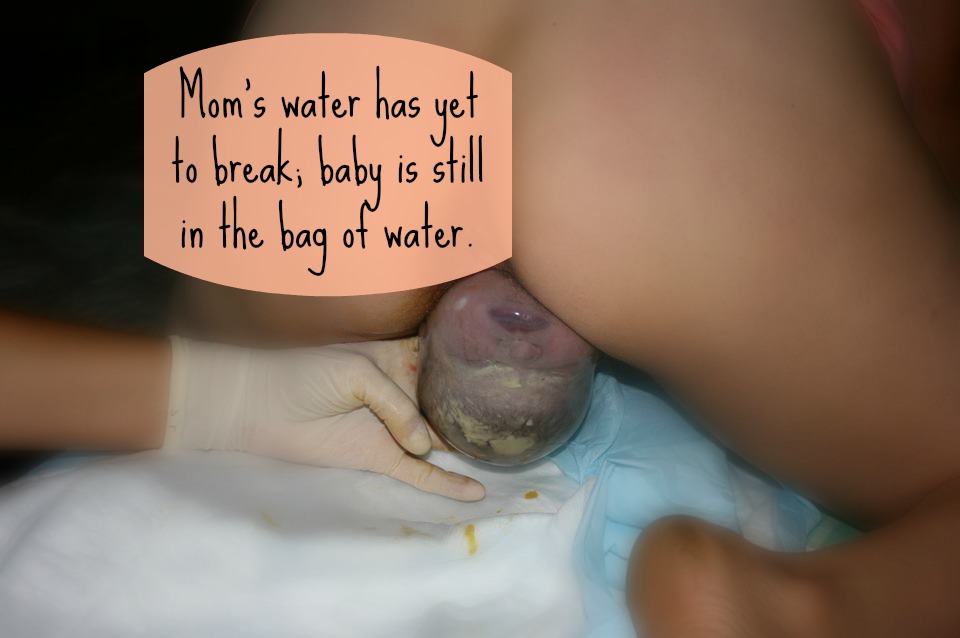 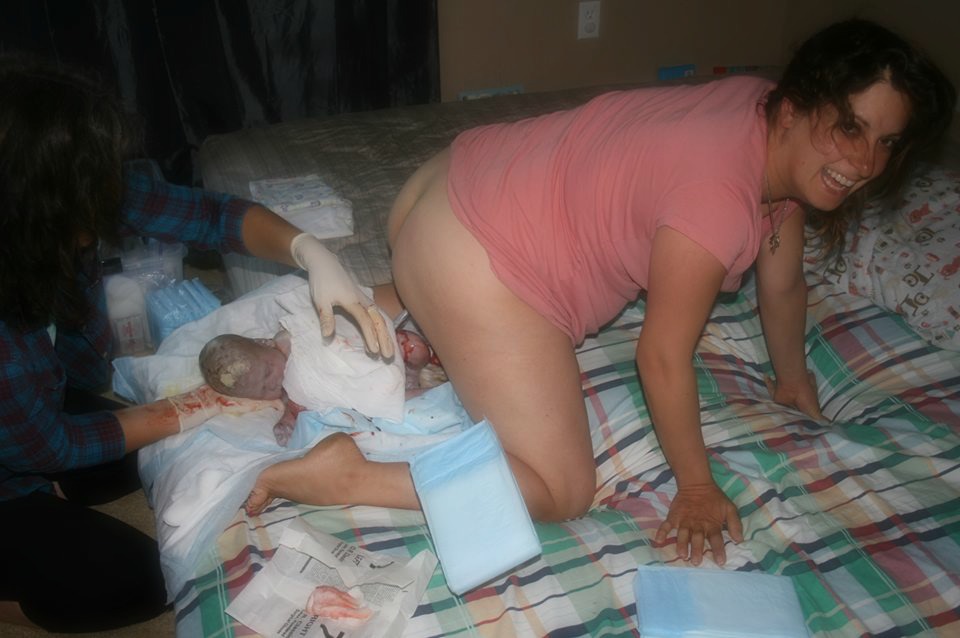 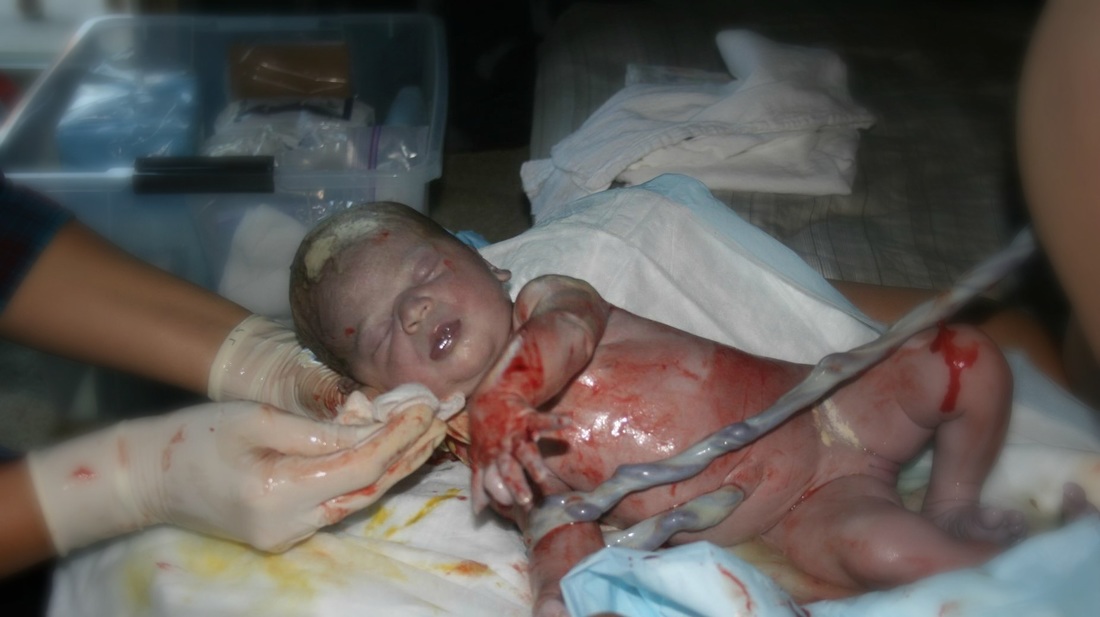 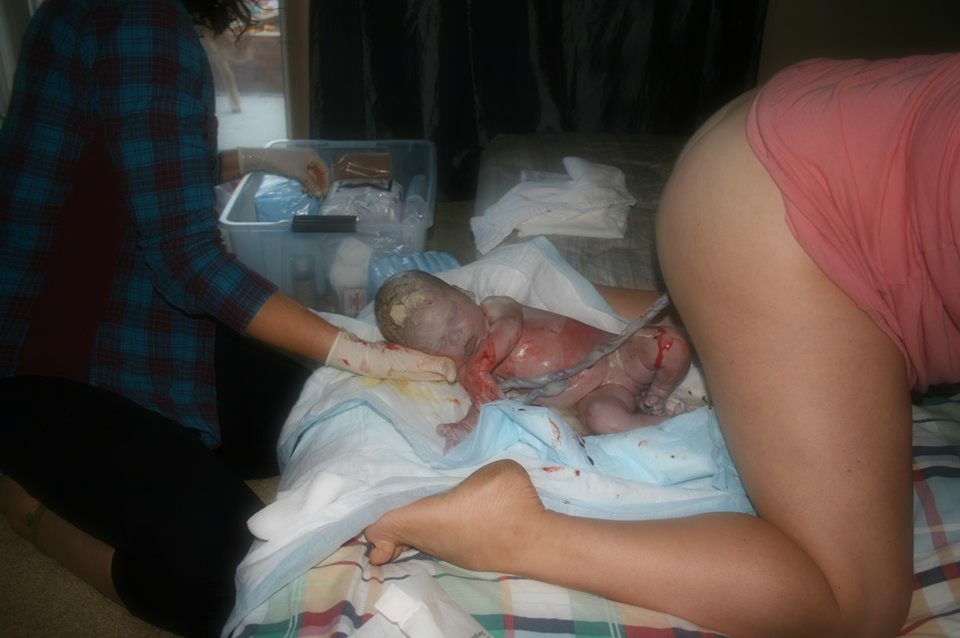 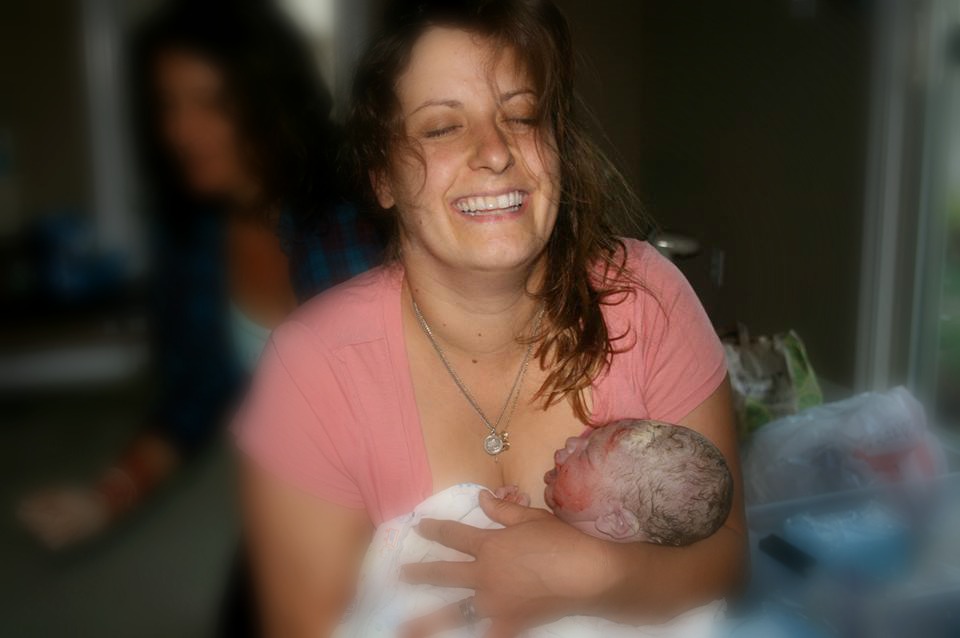  In my classes, I have an activity I am pretty sure I learned in my Passion For Birth training where parents are encouraged to draw their ideas for birth. Taking left-brain concepts (hospital stays and medical procedures) and using right-brain-directed activities (drawing and coloring) blends our thinking and enables us to synthesize ideas, versus analyze them. What's the difference? When you analyze something, you have a singular focus on it and it alone. Imagine being worried about having an unneeded, unwanted, unwarned-about episiotomy. Analyzing this can lead to worrying it might happen to you, without much recourse or thought into the bigger picture of how to prepare to avoid it. Synthesizing takes many pieces of information and plugs them into a bigger picture. In the case of episiotomy, you can learn when they are medically necessary, ways to prevent them during labor (for example, avoiding getting over-hydrated) and second stage (avoiding purple pushing and being more upright), your doctor's opinion and habits, and your birth location's statistics. Here are pictures from students in my Chico, CA classes (I currently offer Lamaze childbirth classes in Bakersfield, Visalia, Hanford, Tulare, and many places in between and beyond). 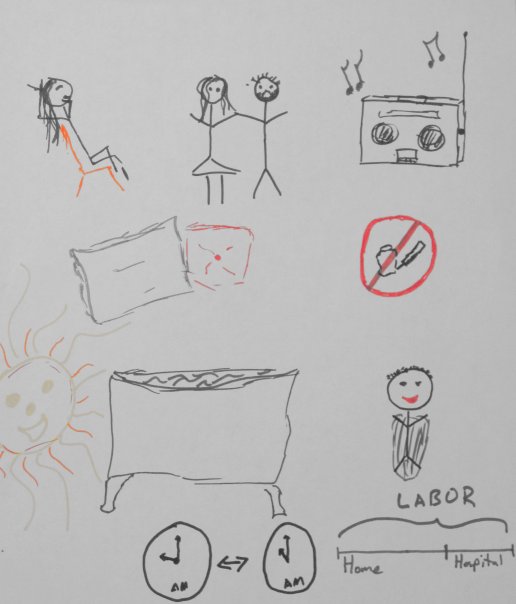 I like the labor length and time-line for being home and being at the hospital. 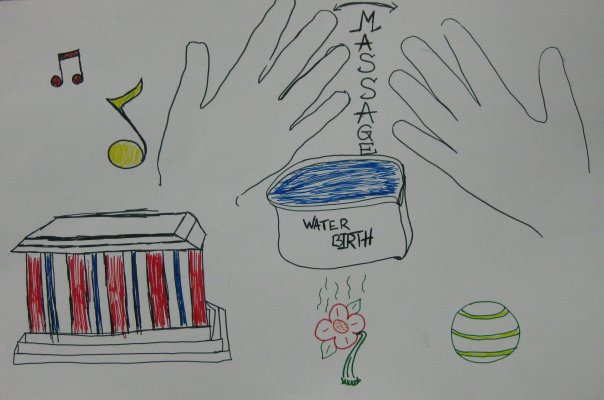 A collaboration by Mom and Dad. I loved what I called The Parthenon -- it actually did represent support! What a great way to draw such an intangible idea! 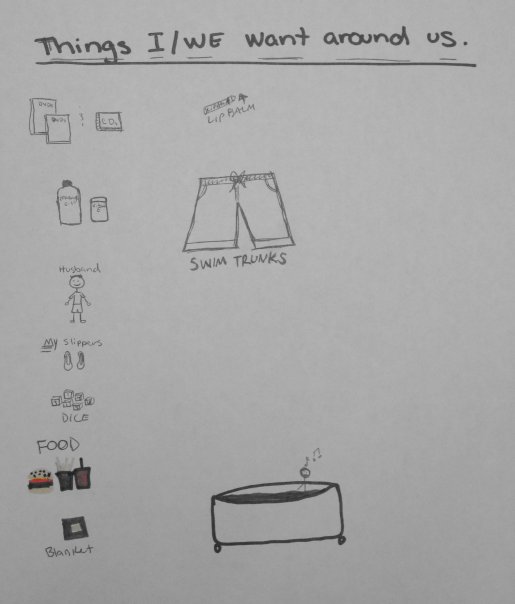 Very neat and organized! All we need are some boxes next to each item and this would be a great packing list! 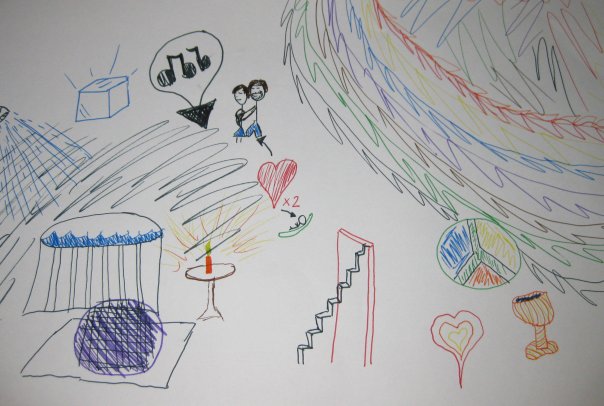 Another picture a mom and dad drew together. See the stairs? They are scaling the wall. The rainbow on the right Dad said, "represents God's love and presence." So many great symbols! 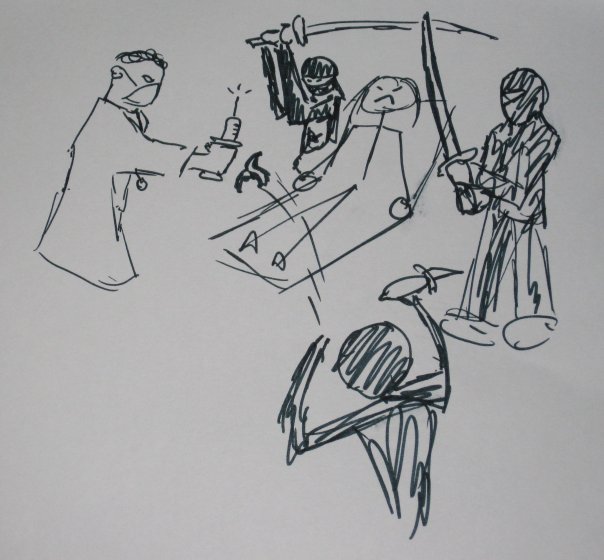 "Ninja Birth." A dad-to-be drew this. He and his partner were on the same page of wanting a normal birth free of unneeded interventions. She was gentle and calm in her desires -- he pictured worst-case scenario, including ninjas and Chinese stars. So of course, sometimes these pictures get silly. But when you remember the role of the partner is one of protector, it makes sense. As a group we process and interpret the images, and families share why they chose what they did and what it means to them. These pictures serve as a jumping-off point so parents can not only discuss what's important to them, but also how to achieve these goals. And I promise, this last picture? This family had a lovely hospital waterbirth with a midwife -- and no ninjas were needed.   I recently had a family reach out to me looking for a doula in the Bakersfield area. I knew I was not available for when they were due, so I offered the names of three other doulas, with reasoning as to why I thought they would be good matches. I also shared the resources area of my website, where I try to keep a running list of doulas in the greater Bakersfield and Visalia areas. I kept in contact with this family for a while, to ensure they had their doula needs met. A couple weeks ago, after coming away from a prenatal with a current client, I noticed I had a Facebook message, and a text message. I thought, wow, someone has been looking for me! I opened them both to see it was one of these three local doulas, thanking me for the referral, as this family hired her. I was tickled with surprise and appreciation for this small act! We are all busy, and I am sure we often think, that was nice of her, I should let her know; the reality is, we don't always follow-through. I know I will remember this doula faster the next time I have a referral, and I also know I will rush to thank the next person who offers me a similar favor. When working towards my certifying births for DONA in Chico, CA, there was one experience where the doctor left before I could ask for an evaluation. Hoping for the best, I wrote her a note and included an evaluation form and a SASE. Honestly, this doctor wasn't my favorite...but she didn't have to be my favorite to provide good care to my client. I thought of authentic statements I could share to show I valued her place in this birth. "Dear Dr. Doe, I had the privilege of helping Jane and John Person during the birth of their baby, Baby. Jane said nothing but good things about you during our prenatal contact -- it is clear to me she felt you two truly connected. I appreciated the way you cared for Jane throughout the pregnancy and birth, helping her feel confident about the experience...." The next paragraph explained the certifying process, a bit about DONA, and that an evaluation from her would be helpful. I closed with: "Thank you for taking the time to do this for me." Guess what? She sent it back, and I was able to use it for my certification.  Once at my pediatrician's office, I was telling my friend (nurse manager of the clinic), how much I appreciated the woman who worked at the registration counter. Every time we came in, she knew our names. She always asked how we were doing. She even remembered things we had talked about before. She felt like a friend, and I noticed this was not just how she treated us -- this was how she treated everyone in this clinic, which had a high rate of patient appointments where many families had Medicaid. She never seemed annoyed, she never acted like people were an inconvenience. As I was sharing this with my friend, she handed me a paper and pencil and asked me to write a note to the hospital which oversaw this clinic, sharing my feelings with them. I thought nothing of it -- it took less than 5 minutes of my day, and then honestly, I forgot about it. The next time we visited the clinic, this woman came rushing toward me, arms open wide, and she thanked me heartily for what I shared. She said it meant so much to her, to be acknowledged and praised for the work she does daily.  Expectant families often ask if they can do anything for their nurses, not only to show appreciation for the long, hard hours nurses work, but also gain a happy member of their birth team. I was impressed when a client showed me the basket of goodies that would accompany her and her husband to the hospital. Knowing nurses often get gifts of yummy (but not always healthy) food, she wanted to be different. Her basket was thoughtfully packed full of hand lotions and sanitizer, Propel packets, pocket-size tissue packs, gum, Chapstick, Jolly Ranchers, and tiny chocolates. This woman had a fast labor, and she didn't go through as many nurses as she expected, but every nurse that walked in -- even her doctor and I -- were encouraged to pull things from the basket we wanted. "Now I don't want to take any of that home! I brought it all for you!" she told everyone, happily. The nurses were tickled at this sweet gesture. Her doctor, at first reluctant, did finally concede, "I do always need Chapstick."
Some might say this is unnecessary, that nurses are being paid at their jobs, so why are "gifts" necessary? One L&D nurse I know shared, "I love the thank you cards. I am shy about gifts and food. It's very nice though, but not necessary." A second one told me: "I absolutely love when patients bring in something special for the unit. We are there for joyous occasions and heartbreaking occasions. When patients acknowledge our work it makes us all feel good about the job we are doing. It lets us know that we made a difference during a very important time in their lives." Isn't that what a true thank you is about? Acknowledging someone's good work? Isn't that something we all want? To know someone noticed, someone cared, it mattered to someone what we did? It's not a hard thing to do, and it can mean so much. I dare you to care enough to say "Thank You." Two little words. |
My Life...♥ four young boys and a boy dog (offspring) Categories
All
Archives
July 2020
|


 RSS Feed
Stacie Bingham, LCCE, CD(DONA), CBS(LER)Calm, comfortable Lamaze education & experienced support for pregnancy, birth, & breastfeeding serving Bakersfield, Delano, Hanford, Porterville, Tehachapi, Tulare, Visalia + the World
661.446.4532 stacie.bing@gmail.com |

|

